
"For Thine Is The Kingdom"
Commentary on the Lord's Prayer
This section is a line-by-line exploration of the Lord's Prayer through the writings of famous theological commentators.
The prayer finishes with a closing doxology, that is, a hymn of praise to God. Not all versions of the Lord's prayer include this as many biblical scholars believe that this was added at a later date.
Adam Clarke
on "For Thine Is The Kingdom"
For thine is the kingdom, ] The whole of this doxology is rejected by Wetstein, Griesbach, and the most eminent critics. The authorities on which it is rejected may be seen in Griesbach and, Wetstein, particularly in the second edition of Griesbach's Testament, who is fully of opinion that it never made a part of the sacred text. It is variously written in several MSS., and omitted by most of the fathers, both Greek and Latin. As the doxology is at least very ancient, and was in use among the Jews, as well as all the other petitions of this excellent prayer, it should not, in my opinion, be left out of the text, merely because some MSS. have omitted it, and it has been variously written in others. See various forms of this doxology, taken from the ancient Jewish writers, in Lightfoot and Schoettgen.
By the kingdom, we may understand that mentioned Mt 6:10, and explained Mt 3:2.
Source: Adam Clarke's Commentary on the Bible
resources on this page
Adam Clarke's on "For thine is the kingdom"
Albert Barnes on "For thine is the kingdom"
(Commentary on Matthew chapter 6, verse 13)
read more commentaries and studies on the Lord's Prayer in our In-Depth Commentary Section
The Lord's Prayer
click to enlarge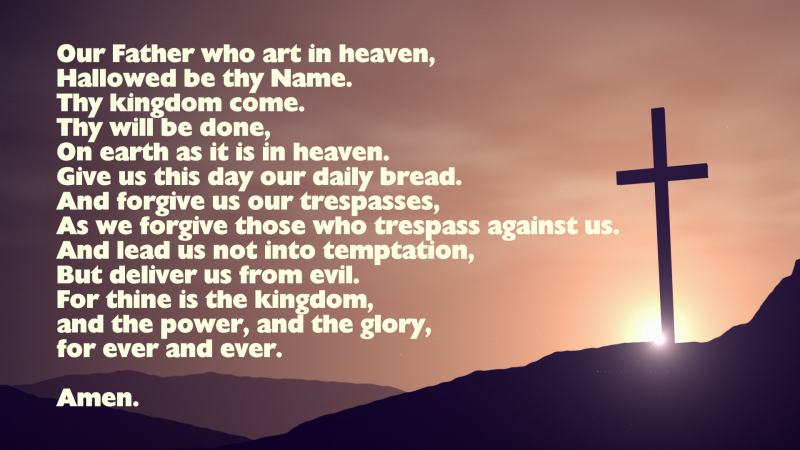
Matthew Henry on "For Thine Is The Kingdom"
The conclusion: For thine is the kingdom, and the power and the glory, for ever. Amen. Some refer this to David's doxology, 1Ch 29:11. Thine, O Lord, is the greatness. It is,
1. A form of plea to enforce the foregoing petitions. It is our duty to plead with God in prayer, to fill our mouth with arguments (Job 23:4) not to move God, but to affect ourselves; to encourage the faith, to excite our fervency, and to evidence both. Now the best pleas in prayer are those that are taken from God himself, and from that which he has made known of himself. We must wrestle with God in his own strength, both as to the nature of our pleas and the urging of them. The plea here has special reference to the first three petitions; "Father in heaven, thy kingdom come, for thine is the kingdom; thy will be done, for thine is the power; hallowed be thy name, for thine is the glory." And as to our own particular errands, these are encouraging: "Thine is the kingdom; thou hast the government of the world, and the protection of the saints, thy willing subjects in it;" God gives and saves like a king. "Thine is the power, to maintain and support that kingdom, and to make good all thine engagements to thy people." Thine is the glory, as the end of all that which is given to, and done for, the saints, in answer to their prayers; for their praise waiteth for him. This is matter of comfort and holy confidence in prayer.
Source: Matthew Henry's Commentary on the Whole Bible Volume V (Matthew to John)
Thine is the kingdom. That is, thine is the reign or dominion. Thou hast control over all these things, and canst so order them as to answer these petitions.
Source: Barnes' New Testament Notes
Next: "The Power and the Glory"
about the commentary writers
In this section you can discover more about the Lord's Prayer through some of the most notable exponents in biblical interpretation. • Matthew Henry (1662-1714) was a non-conformist English clerygman. His commentaries on the scriptures are intended as a devotional guide to the Bible, rather than as a critical study.
 • Albert Barnes (1798-1870) was a Presbyterian minister and American theologian. His 'New Testament Notes' are invaluable in helping to understand difficult passages of scripture. Barnes frequently references the original Greek to reveal the meaning of the text.
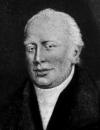 • Adam Clarke (1769 or 62 to 1832) was a Methodist minister and biblical theologian. His extensive commentary on the New Testament, at around 6000 pages long, is one of the longest works on the bible ever written by one person.