
The Meaning of The Lord's Prayer
In-depth commentary & resources
There are two commentaries on The Lord's Prayer by different authors in this section.
 John Calvin (1507-1564) was part of the reformation movement of the sixteenth century. His most notable theological stance is the belief that God is sovereign in the matters of salvation and election.
Alexander Maclaren (1826-1910) was a English Baptist minister. He is most famous for his expository style, drawing on examples from life and nature to develop biblical truths. The commentaries in this section are taken from his writings on the version of the Lord's prayer in Luke's Gospel.
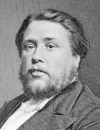
Charles Haddon Spurgeon (1834-92) is one of the most famous preachers of the nineteenth century. The two sermons found in this section record some of his fascinating insights into the meaning of the Lord's Prayer.
Also in this section of the website you can discover Wesley's bible notes on the scripture that records the Lord's Prayer (Matthew 6:9-13).
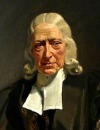 John Wesley (born 1703, died aged 87 in 1791) is the founder of the modern day Methodist movement. His most famous theological insight is "Christian Perfection", a belief that the love of God can reign supreme in the believers heart. Also to be found in this section is a contemporary study on the Lord's Prayer by Phil Harper, a R.E. teacher based in Sussex, England. This material is suitable for group study and practical application.
Featured here are four differing musical interpretations of the Lord's Prayer. These vary considerably from the classical style of Albert Malotte to the modern pop-rock of Cliff Richard!
Also in this section is a printable version of the prayer, and a reference page for the location of the Lord's Prayer in the bible.
The Lord's Prayer
A reading of the Lord's Prayer in Aramaic, Spanish, Chinese and English, filmed in downtown New York shortly after the 9/11 tragedy:-

find out more about the Lord's Prayer in our Line-by-line commentary section
Take a moment to hear from God...
here are links to some wonderfully inspired prayers to aid your journey