
Hallowed Be Thy Name
Commentary on the Lord's Prayer
"Hallowed be thy Name" is the first of the seven petitions in the prayer (the first three address God, the second four are prayers related to our needs and concerns).
"Hallowed" is not a word frequently used in the contemporary English language, and so it's meaning is not immediately apparent. Hallowed means to consecrate, to be made set apart as holy. So when we pray "hallowed be thy name" we are asking that His name may be recognised as sacred. This flows out of the first line of the prayer "Our Father, who is in heaven", who is distinct from us and lives in eternity.
However, there is another element to this. The Good News Translation puts it this way "May your holy name be honored" (Matthew 6:9). For God's name to be kept as revered on Earth, this will necessitate a response on our part. We can not fully pray this line unless our lives desire to reflect this wonderful holiness. Honouring God as holy will lead us into a closer walk with our Creator and the development of holiness in ourselves.
For further commentary on "Hallowed", check out a great short video on this by Jimmy Akin on Youtube.
The Lord's Prayer
resources on this page
Adam Clarke's on "Hallowed be thy Name"
Albert Barnes on "Hallowed be thy Name"
(Commentary on Matthew chapter 6, verse 9)
read more commentaries and studies on the Lord's Prayer in our In-Depth Commentary Section
Adam Clarke
on "Hallowed Be Thy Name"
Hallowed] AGIASQHTWAGIAZW. from a negative, and GH, the earth, a thing separated from the earth, or from earthly purposes and employments. As the word sanctified, or hallowed, in Scripture, is frequently used for the consecration of a thing or person to a holy use or office, as the Levites, first-born, tabernacle, temple, and their utensils, which were all set apart from every earthly, common, or profane use, and employed wholly in the service of God, so the Divine Majesty may be said to be sanctified by us, in analogy to those things, viz. when, we separate him from, and in our conceptions and desires exalt him above, earth and all things.
Thy name.] That is, GOD himself, with all the attributes of his Divine nature-his power, wisdom, justice, mercy,
We hallow God's name, 1st. With our lips, when all our conversation is holy, and we speak of those things which are meet to minister grace to the hearers.
2dly. In our thoughts, when we suppress every rising evil, and have our tempers regulated by his grace and Spirit.
3dly. In our lives, when we begin, continue, and end our works to his glory. If we have an eye to God in all we perform, then every act of our common employment will be an act of religious worship.
4thly. In our families, when we endeavour to bring up our children in the discipline and admonition or the Lord; instructing also our servants in the way of righteousness.
5thly. In a particular calling or business, when we separate the falsity, deception, and lying, commonly practised, from it; buying and selling as in the sight of the holy and just God.
Source: Adam Clarke's Commentary on the Bible
Matthew Henry on "Hallowed"
II. The petitions, and those are six; the three first relating more immediately to God and his honour, the three last to our own concerns, both temporal and spiritual; as in the ten commandments, the four first teach us our duty toward God, and the last six our duty toward our neighbour. The method of this prayer teaches us to seek first the kingdom of God and his righteousness, and then to hope that other things shall be added.
1. Hallowed be thy name. It is the same word that in other places is translated sanctified. But here the old word hallowed is retained, only because people were used to it in the Lord's prayer. In these words, (1.) We give glory to God; it may be taken not as a petition, but as an adoration; as that, the Lord be magnified, or glorified, for God's holiness is the greatness and glory of all his perfections. We must begin our prayers with praising God, and it is very fit he should be first served, and that we should give glory to God, before we expect to receive mercy and grace from him. Let him have praise of his perfections, and then let us have the benefit of them. (2.) We fix our end, and it is the right end to be aimed at, and ought to be our chief and ultimate end in all our petitions, that God may be glorified; all our other requests must be in subordination to this, and in pursuance of it. "Father, glorify thyself in giving me my daily bread and pardoning my sins," &c. Since all is of him and through him, all must be to him and for him. In prayer our thoughts and affections should be carried out most to the glory of God. The Pharisees made their own name the chief end of their prayers (Mt 6:5, to be seen of men), in opposition to which we are directed to make the name of God our chief end; let all our petitions centre in this and be regulated by it. "Do so and so for me, for the glory of thy name, and as far as is for the glory of it." (3.) We desire and pray that the name of God, that is, God himself, in all that whereby he has made himself known, may be sanctified and glorified both by us and others, and especially by himself. "Father, let thy name be glorified as a Father, and a Father in heaven; glorify thy goodness and thy highness, thy majesty and mercy. Let thy name be sanctified, for it is a holy name; no matter what becomes of our polluted names, but, Lord, what wilt thou do to thy great name?" When we pray that God's name may be glorified, [1.] We make a virtue of necessity; for God will sanctify his own name, whether we desire it or not; I will be exalted among the heathen, Ps 46:10. [2.] We ask for that which we are sure shall be granted; for when our Saviour prayed, Father glorify thy name, it was immediately answered, I have glorified it, and will glorify it again.
Source: Matthew Henry's Commentary on the Whole Bible Volume V (Matthew to John)
Next: "Thy Kingdom Come"
The Lord's Prayer
A short inspiring reading of this famous prayer:-

about the commentary writers
In this section you can discover more about the Lord's Prayer through some of the most notable exponents in biblical interpretation.  • Matthew Henry (1662-1714) was a non-conformist English clerygman. His commentaries on the scriptures are intended as a devotional guide to the Bible, rather than as a critical study.
 • Albert Barnes (1798-1870) was a Presbyterian minister and American theologian. His 'New Testament Notes' are invaluable in helping to understand difficult passages of scripture. Barnes frequently references the original Greek to reveal the meaning of the text.
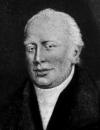 • Adam Clarke (1769 or 62 to 1832) was a Methodist minister and biblical theologian. His extensive commentary on the New Testament, at around 6000 pages long, is one of the longest works on the bible ever written by one person.
Hallowed be thy name. The word hallowed means, to render or pronounce holy. God's name is essentially holy; and the meaning of this petition is, "Let thy name be celebrated, and venerated, and esteemed as holy everywhere, and receive of all men proper honours." It is thus the expression of a wish or desire, on the part of the worshipper, that the name of God, or God himself, should be held everywhere in proper veneration.
Source: Barnes' New Testament Notes
More resources on the Lord's prayer...
here are links to some commentaries and versions on this famous prayer