
Our Father Who Art In Heaven
Our Father who art in heaven,
Hallowed be thy Name.
Thy kingdom come.
Thy will be done,
On earth as it is in heaven.
Give us this day our daily bread.
And forgive us our trespasses,
As we forgive those who trespass against us.
And lead us not into temptation,
But deliver us from evil.
[For thine is the kingdom,
and the power, and the glory,
for ever and ever.]
Amen.
Source: the litany section of the U.S. Book of Common Prayer, 1928 edition.
Commentary
on the first line of the Lord's Prayer
Notice Jesus's careful choice of words here. It is not "My Father" but "Our Father". In an individualistic age, faith often gets spoken of as "my relationship with God". But Christ reminds us that our connection with God is experienced as a community of faith. This idea is developed by the writer of the book of Hebrews "Now faith is confidence in what we hope for and assurance about what we do not see" - notice it is not "I" but "we" again.
"Our Father" - God is revealed as father. Here we can think of the attributes of a good father - protector, provider, carer and full of love and admiration for his child. This is not some far off uncaring distant being we are addressing! God is our loving parent. The Apostle Paul develops this idea in his writings to the believers in Rome 'by him we cry, “Abba, Father.” ' (Rom 8:15)
"Who is in Heaven" - God is also separate from us, in eternity. As such, Jesus rejects the idea of pantheism, the notion that God is not transcendent but only exists within the universe (in other words, everything we see around is in some way God, or part of God, and God does not exist apart from this).
The Lord's Prayer
A short inspiring reading of this famous prayer:-
resources on this page
Adam Clarke's on "Our Father"
Albert Barnes on "Our Father"
(Commentary on Matthew chapter 6, verse 9)
read more commentaries and studies on the Lord's Prayer in our In-Depth Commentary Section
Adam Clarke
on "Our Father"
[Our Father] It was a maxim of the Jews, that a man should not
pray alone, but join with the Church; by which they particularly
meant that he should, whether alone or with the synagogue, use the
plural number as comprehending all the followers of God. Hence,
they say, Let none pray the short prayer, i.e. as the gloss
expounds it, the prayer in the singular, but in the plural number.
See Lightfoot on this place.
This prayer was evidently made in a peculiar manner for the
children of God. And hence we are taught to say, not MY Father,
but OUR Father. The heart, says one, of a child of God, is a
brotherly heart, in respect of all other Christians: it asks
nothing but in the spirit of unity, fellowship, and Christian
charity; desiring that for its brethren which it desires for
itself.
The word Father, placed here at the beginning of this prayer,
includes two grand ideas, which should serve as a foundation to
all our petitions: 1st. That tender and respectful love which we
should feel for God, such as that which children feel for their
fathers. 2dly. That strong confidence in God's love to us, such
as fathers have for their children. Thus all the petitions in
this prayer stand in strictest reference to the word Father; the
first three referring to the love we have for God; and the three
last, to that confidence which we have in the love he bears to us.
The relation we stand in to this first and best of beings
dictates to us reverence for his person, zeal for his honour,
obedience to his will, submission to his dispensations and
chastisements, and resemblance to his nature.
Which art in heaven] The phrase , abinu
sheboshemayim, our Father who art in heaven, was very common among
the ancient Jews; and was used by them precisely in the same sense
as it is used here by our Lord.
This phrase in the Scriptures seems used to express:
1st. His OMNIPRESENCE. The heaven of heavens cannot contain
thee. 1Ki 8:27: that is, Thou fillest immensity.
2dly. His MAJESTY and DOMINION over his creatures. Art thou not
God in heaven, and rulest thou not over all the kingdoms of the
heathen? 2Ch 20:6.
3dly. His POWER and MIGHT. Art thou not God in heaven, and in
thy hand is there not power and might, so that no creature is able
to withstand thee! 2Ch 20:6.
Our God is in heaven, and hath done whatsoever he pleased.
Ps 115:3.
4thly. His OMNISCIENCE. The Lord's throne is in heaven, his
eyes behold, his eye-lids try the children of men. Ps 11:4.
The Lord looketh down from heaven, he beholdeth all the sons of
men. Ps 33:13-15.
5thly. His infinite PURITY and HOLINESS. Look down from thy holy
habitation, . De 26:15.
Thou art the high and lofty One, who inhabiteth eternity, whose
name is holy. Isa 57:15.
Source: Adam Clarke's Commentary on the Bible
Matthew Henry on "Our Father"
I. The preface, Our Father who art in heaven. Before we come to our business, there must be a solemn address to him with whom our business lies; Our Father. Intimating, that we must pray, not only alone and for ourselves, but with and for others; for we are members one of another, and are called into fellowship with each other. We are here taught to whom to pray, to God only, and not to saints and angels, for they are ignorant of us, are not to have the high honours we give in prayer, nor can give favours we expect. We are taught how to address ourselves to God, and what title to give him, that which speaks him rather beneficent than magnificent, for we are to come boldly to the throne of grace.
1. We must address ourselves to him as our Father, and must call him so. He is a common Father to all mankind by creation, Mal 2:10,Ac 17:28. He is in a special manner a Father to the saints, by adoption and regeneration (Eph 1:5,Ga 4:6); and an unspeakable privilege it is. Thus we must eye him in prayer, keep up good thoughts of him, such as are encouraging and not affrighting; nothing more pleasing to God, nor pleasant to ourselves, than to call God Father. Christ in prayer mostly called God Father. If he be our Father, he will pity us under our weaknesses and infirmities (Ps 103:13), will spare us (Mal 3:17), will make the best of our performances, though very defective, will deny us nothing that is good for us, Lu 11:11-13. We have access with boldness to him, as to a father, and have an advocate with the Father, and the Spirit of adoption. When we come repenting of our sins, we must eye God as a Father, as the prodigal did (Lu 15:18,Jer 3:19); when we come begging for grace, and peace, and the inheritance and blessing of sons, it is an encouragement that we come to God, not as an unreconciled, avenging Judge, but as a loving, gracious, reconciled Father in Christ, Jer 3:4.
2. As our Father in heaven: so in heaven as to be every where else, for the heaven cannot contain him; yet so in heaven as there to manifest his glory, for it is his throne (Ps 103:19), and it is to believers a throne of grace: thitherward we must direct our prayers, for Christ the Mediator is now in heaven, Heb 8:1. Heaven is out of sight, and a world of spirits, therefore our converse with God in prayer must be spiritual; it is on high, therefore in prayer we must be raised above the world, and lift up our hearts, Ps 5:1. Heaven is a place of perfect purity, and we must therefore lift up pure hands, must study to sanctify his name, who is the Holy One, and dwells in that holy place, Le 10:3. From heaven God beholds the children of men, Ps 33:13,14. And we must in prayer see his eye upon us: thence he has a full and clear view of all our wants and burdens and desires, and all our infirmities. It is the firmament of his power likewise, as well as of his prospect, Ps 150:1. He is not only, as a Father, able to help us, able to do great things for us, more than we can ask or think; he has wherewith to supply our needs, for every good gift is from above. He is a Father, and therefore we may come to him with boldness, but a Father in heaven, and therefore we must come with reverence, Ec 5:2. Thus all our prayers should correspond with that which is our great aim as Christians, and that is, to be with God in heaven. God and heaven, the end of our whole conversation, must be particularly eyed in every prayer; there is the centre to which we are all tending. By prayer, we send before us thither, where we profess to be going.
Source: Matthew Henry's Commentary on the Whole Bible Volume V (Matthew to John)
Next: "Hallowed Be Thy Name"
The Lord's Prayer
click to enlarge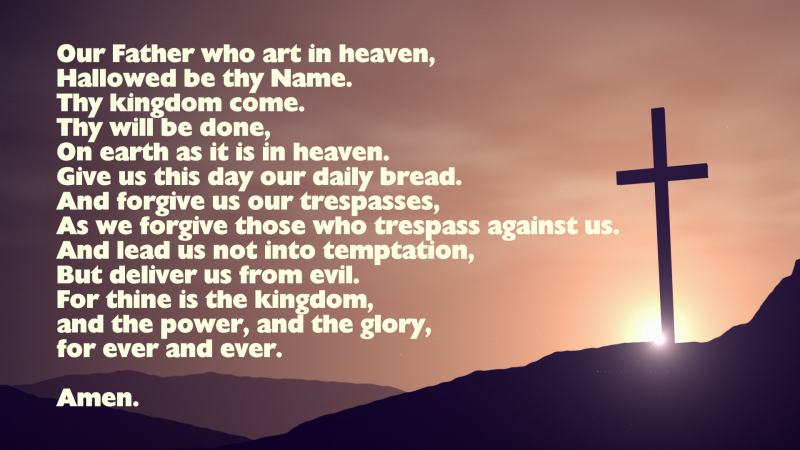
Where is the Lord's Prayer in the bible?
"Our Father who art in heaven"
occurs twice in the scriptures:-
Matthew chapter 6, verses 9 - 13
and
Luke chapter 11, verses 1 - 4
about the commentary writers
In this section you can discover more about the Lord's Prayer through some of the most notable exponents in biblical interpretation.
 • Matthew Henry (1662-1714) was a non-conformist English clerygman. His commentaries on the scriptures are intended as a devotional guide to the Bible, rather than as a critical study.
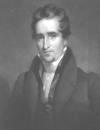 • Albert Barnes (1798-1870) was a Presbyterian minister and American theologian. His 'New Testament Notes' are invaluable in helping to understand difficult passages of scripture. Barnes frequently references the original Greek to reveal the meaning of the text.
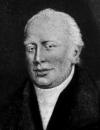 • Adam Clarke (1769 or 62 to 1832) was a Methodist minister and biblical theologian. His extensive commentary on the New Testament, at around 6000 pages long, is one of the longest works on the bible ever written by one person.
Verse 9. Our Father. God is called a Father,
(1.) as he is the Creator and the Great Parent of all.
(2.) The Preserver of the human family, and the Provider for their wants, Mt 5:45, 6:32.
(3.) In a peculiar sense the Father of those who are adopted into his family, who put confidence in him, who are true followers of Christ, and made heirs of life, Rom 8:14-17.
Source: Barnes' New Testament Notes
More resources on the Lord's prayer...
here are links to some commentaries and versions on this famous prayer